Welcome to my blog where I do random reviews of books and sporadic reviews of movies. Here you'll find out what I'm currently reading and watching. Posts are regularly uploaded on the weekends and sometimes throughout the week. Hope you enjoy the randomness.
Showing posts with label African-American Studies. Show all posts
Monday, June 17, 2013
Wicked Wildfire Read-A-Thon Wrap-Up
My goal for the Wicked Wildfire Read-A-Thon was very simple. I wanted to read four books in one week. I started off strong as usual and slowly waned by the challenge's end. Overall, I finished two books and started one more reading about half-way through before I put it down.
My first book that I picked up was Corregidora by Gayl Jones, which was one of my African-American/African book selections for the week. I got about 50-54% done with this book before I was notified that Wonder by R.J. Palacio was available for me to download from the library. Currently, I have 94 pages before I am done with Jones' book.
I picked up Wonder by R.J Palacio from my library's eBook collection since I had seen so many BookTubers haul this book. I absolutely adored this story and have added it to my favorites of 2013 list. I plan to review this book very soon.
Next, I read Heist Society by Ally Carter, which I got in eBook form as well. I personally expected a bit more than I actually got from this book. It was a good read, but not a great one. I will be doing a series review for this book along with its two companions so I won't have an actual review for at least another month.
Other books that I picked up last week included: The Reluctant Fundamentalist by Mohsin Hamed, The Warmth of Other Suns by Isabel Wilkerson, Our Souls To Keep by Gary A Caruso, and Uncommon Criminals by Ally Carter, which is the second book in the Heist Society series.
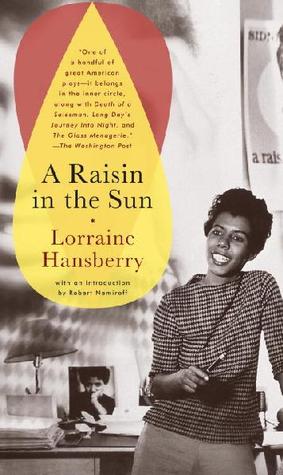
Movie & Play Review of Lorraine Hansberry's Raisin In The Sun
I gave the play 5 stars and the movie 3 stars.
The thing about classics of any kind is that you never know what you're going to get when you read or watch them. You can look up all the reviews you want, but until you've cracked open the book or movie for yourself you can't be sure if any classic is right for you.
I have often heard people gush over Lorraine Hansberry's play, A Raisin In The Sun and told myself there was no rush to read it on my own because I would eventually have to read it for some class. Sadly, this book never actually made it onto the required reading list for any of my classes so it was left up to me to read it at my leisure. This summer, I finally had a chance to pick the play up from my mother's collection while I waited for my own boxes to be shipped from Pittsburgh. My ultimate reaction was that this play was nothing like I expected it was infinitely better.
Play Review
A Raisin In The Sun follows the Youngers, an African-American family living in South Side Chicago sometime between the end of WWII and the present. The Younger family includes Mama/Lena, a retired domestic worker;Walter/Brother, her son who has big dreams of making it; Ruth, Walter's wife; Ruth and Walter's son, Travis; and Beneatha, Walter's younger sister who wants to become a doctor. As the play begins, the Youngers are all anticipating getting the insurance check that covered Walter Sr., Mama's husband who has recently died.
Each person in the family has big dreams of what they want to do with the money when they get it however, Walter is the most vocal about his plans. When the check finally comes, Mama takes the money and buys a house in an all-white neighborhood with half of it and gives the rest to Walter with strict instructions to put half in the bank for Beneatha's medical education and use the other half for whatever he sees fit. Unfortunately, Walter does the opposite and things start to unravel from there.
For once, I can actually agree with the general consensus and say that this particular play is worthy of the title of classic. Everything in Hansberry's play felt extremely relevant and real to me, from the characters who were trying to figure out how to spend their new found fortune to the themes that Hansberry brought up about African-American's place in American society. Even on paper, the characters' emotions and actions are mapped out and shown so well that watching a film or live performance for Hansberry's work was actually unnecessary. I personally enjoyed each aspect of the play and could see how certain issues such as, the idea of the black man's ambitions being unrecognized or the questioning of whether blacks are better off assimilating into the American culture vs. African culture are still relevant. Yet, when I watched the 1961 film adaptation, I wasn't necessarily as impressed by it like I was with the play.
Movie Review
For starters, the movie added and deleted key scenes that were important to the overall message of the play. In one deleted scene, Beneatha cuts her permed hair off and everyone is shocked by her actions. This depiction of going natural was empowering in the play. In the film, this scene is cut so that instead of physically shedding what is implied to be her "assimilated American habits," Beneatha just goes into a monologue about how she will not take on anymore American habits and will instead identify more with her African roots. In my opinion, this scene would have been amazing if it was acted out properly by Diana Sands who played Beneatha.
Likewise, the scene where the Youngers' neighbor comes in to borrow cleaning products before the family moves and warns/reminds Mama that going into an all-white neighborhood to live isdangerous for the times. This particular scene while not as profound as Beneatha's hair cutting scene would have been good to show that not only whites were weary of the trouble that could come from blacks and whites living together. Yet, directors of the film chose to show only the white viewpoint instead in the visit that Mr. Linder who acts as the "welcome committee" to the Youngers' new neighborhood makes to the family's South Side apartment.
Even though the film did delete these two scenes and add scenes where Walter is sitting in a bar or shown chauffeuring his white boss around, I did somewhat enjoy it because of Sidney Poitier's acting in the role of Walter. Out of all the actors in the film, he gave the best performance to me. His emotions were raw and he embodied the idea of being a man who the world had beaten down on to a T. Seeing him play Wlater alongside Ruby Dee who played the role of Ruth was interesting since these two seemed to have good on screen chemistry. While I did enjoy Diana Sands in her role as Beneatha, I was a little annoyed with her character in general in both the play and the book. However, I did chalk this up to being just part of the acceptable emotions that Hansberry's play was meant to draw out of me.
I would definitely recommend the play and the 1961 movie adaption. I eventually hope to get a chance to watch the 2008 film adaption to see how Sean "P. Diddy" Combs acted in his role as Walter. Not to mention Phylicia Rashad is one of my favorite actresses so I would love to see her in the role of Mama as well.
I hope everyone's day went well and that a lot of reading was done in between celebrating Father's Day.
The thing about classics of any kind is that you never know what you're going to get when you read or watch them. You can look up all the reviews you want, but until you've cracked open the book or movie for yourself you can't be sure if any classic is right for you.
I have often heard people gush over Lorraine Hansberry's play, A Raisin In The Sun and told myself there was no rush to read it on my own because I would eventually have to read it for some class. Sadly, this book never actually made it onto the required reading list for any of my classes so it was left up to me to read it at my leisure. This summer, I finally had a chance to pick the play up from my mother's collection while I waited for my own boxes to be shipped from Pittsburgh. My ultimate reaction was that this play was nothing like I expected it was infinitely better.
Play Review
A Raisin In The Sun follows the Youngers, an African-American family living in South Side Chicago sometime between the end of WWII and the present. The Younger family includes Mama/Lena, a retired domestic worker;Walter/Brother, her son who has big dreams of making it; Ruth, Walter's wife; Ruth and Walter's son, Travis; and Beneatha, Walter's younger sister who wants to become a doctor. As the play begins, the Youngers are all anticipating getting the insurance check that covered Walter Sr., Mama's husband who has recently died.
For once, I can actually agree with the general consensus and say that this particular play is worthy of the title of classic. Everything in Hansberry's play felt extremely relevant and real to me, from the characters who were trying to figure out how to spend their new found fortune to the themes that Hansberry brought up about African-American's place in American society. Even on paper, the characters' emotions and actions are mapped out and shown so well that watching a film or live performance for Hansberry's work was actually unnecessary. I personally enjoyed each aspect of the play and could see how certain issues such as, the idea of the black man's ambitions being unrecognized or the questioning of whether blacks are better off assimilating into the American culture vs. African culture are still relevant. Yet, when I watched the 1961 film adaptation, I wasn't necessarily as impressed by it like I was with the play.
Movie Review
For starters, the movie added and deleted key scenes that were important to the overall message of the play. In one deleted scene, Beneatha cuts her permed hair off and everyone is shocked by her actions. This depiction of going natural was empowering in the play. In the film, this scene is cut so that instead of physically shedding what is implied to be her "assimilated American habits," Beneatha just goes into a monologue about how she will not take on anymore American habits and will instead identify more with her African roots. In my opinion, this scene would have been amazing if it was acted out properly by Diana Sands who played Beneatha.
Likewise, the scene where the Youngers' neighbor comes in to borrow cleaning products before the family moves and warns/reminds Mama that going into an all-white neighborhood to live isdangerous for the times. This particular scene while not as profound as Beneatha's hair cutting scene would have been good to show that not only whites were weary of the trouble that could come from blacks and whites living together. Yet, directors of the film chose to show only the white viewpoint instead in the visit that Mr. Linder who acts as the "welcome committee" to the Youngers' new neighborhood makes to the family's South Side apartment.Even though the film did delete these two scenes and add scenes where Walter is sitting in a bar or shown chauffeuring his white boss around, I did somewhat enjoy it because of Sidney Poitier's acting in the role of Walter. Out of all the actors in the film, he gave the best performance to me. His emotions were raw and he embodied the idea of being a man who the world had beaten down on to a T. Seeing him play Wlater alongside Ruby Dee who played the role of Ruth was interesting since these two seemed to have good on screen chemistry. While I did enjoy Diana Sands in her role as Beneatha, I was a little annoyed with her character in general in both the play and the book. However, I did chalk this up to being just part of the acceptable emotions that Hansberry's play was meant to draw out of me.
I would definitely recommend the play and the 1961 movie adaption. I eventually hope to get a chance to watch the 2008 film adaption to see how Sean "P. Diddy" Combs acted in his role as Walter. Not to mention Phylicia Rashad is one of my favorite actresses so I would love to see her in the role of Mama as well.
I hope everyone's day went well and that a lot of reading was done in between celebrating Father's Day.
Saturday, March 30, 2013
The Question of Polygamy:A Book Review On "Changes: A Love Story" by Ama Ata Aidoo
This book was finished on March 15, 2013.
I gave this book a 4.5 stars.
I found that this novel was a lesson in love for me. Aidoo presents us with the story of Esi, a Ghanain woman who has been thoroughly educated about the world but, not about love.
Esi's character reads like a modern soap opera about a woman who has grown tired of her neat marriage and has started to crave adventure even though Esi herself labels this longing as a desire to not be under the thumb of any man especially, her husband, Oko who she sees as a mama's boy who is looking for a maid opposed to a wife. To rectify this conundrum, Esi decides that she will separate from her husband to live the life that she has always wanted. However, while living this life, she finds a new love interests in Ali, a devout Muslim man who offers her the chance to be his second wife after their torrid love affair. From here many emotional and social problems commence.
Aidoo writes a novel that is full of cultural nods toward the ever present battle between European and African civilizations. Thankfully, none of these nods come off as preachy or as being blatant PSA's on what the "White man has done to us." This novel shapes up to be an intellectual version of chick lit. Well written and persuasive at some points, the novel gives the reader a look into a modern Africa that is not often talked about. The novel is good for anyone who wants to expand their horizons into a broader sphere of world literature without becoming too overwhelmed. I would definitely recommend this novel to anyone who wants a chance to look at postcolonial African cultures or just wants a different type of beach read.
I gave this book a 4.5 stars.
I found that this novel was a lesson in love for me. Aidoo presents us with the story of Esi, a Ghanain woman who has been thoroughly educated about the world but, not about love.
Esi's character reads like a modern soap opera about a woman who has grown tired of her neat marriage and has started to crave adventure even though Esi herself labels this longing as a desire to not be under the thumb of any man especially, her husband, Oko who she sees as a mama's boy who is looking for a maid opposed to a wife. To rectify this conundrum, Esi decides that she will separate from her husband to live the life that she has always wanted. However, while living this life, she finds a new love interests in Ali, a devout Muslim man who offers her the chance to be his second wife after their torrid love affair. From here many emotional and social problems commence.
Aidoo writes a novel that is full of cultural nods toward the ever present battle between European and African civilizations. Thankfully, none of these nods come off as preachy or as being blatant PSA's on what the "White man has done to us." This novel shapes up to be an intellectual version of chick lit. Well written and persuasive at some points, the novel gives the reader a look into a modern Africa that is not often talked about. The novel is good for anyone who wants to expand their horizons into a broader sphere of world literature without becoming too overwhelmed. I would definitely recommend this novel to anyone who wants a chance to look at postcolonial African cultures or just wants a different type of beach read.
Subscribe to:
Posts (Atom)