Showing posts with label world literature. Show all posts

Monday, June 3, 2013

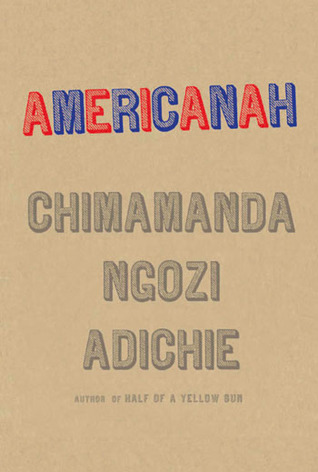
Through The Voice of the "Other": Book Review on Americanah by Chimamanda Ngozi Adichie

 “I think you travel to search and you come back home to find yourself there.”  - Chimamanda Ngozi Adichie
I've been struggling to write a review for Chimamanda Ngozi Adichie's book, Americanah for the past week due to mixed feelings about it. Upon finishing it, I was equal parts content and frustrated with the book. While it met my expectations in a way, I was also let down by certain aspects of the novel. I end up giving this book 4 stars due to a lackluster ending and the general feeling that Adichie only meant her characters to be mouthpieces to voice her feelings on different cultural and political topics.

At its heart, Americanah is a book about various immigrants who are trying to work their way through discovering what it means to be a part of the countries they've immigrated to while also holding on to their original cultures. For the most part, Adichie's story is told through the perspective of Ifemelu, a Nigerian blogger who has lived in America for thirteen years and Obinze, a wealthy Nigerian business man who still lives in Nigeria. From Ifemelu and Obinze's perspective, the reader learns about different race issues that go on in America, the way the Nigerian government works, and hears the stories of different people who have settled abroad or come home to live in Nigeria after living abroad.

As the novel begins, Ifemelu is set to return home to Nigeria after her hiatus in America and decides to reconnect with her childhood sweetheart, Obinze. The two previously lost contact once Ifemelu went to America to finish college. By the time that Ifemelu reaches out to him, Obinze has moved on with his life and is married. Adichie makes it very obvious to the reader that the two characters have built separate lives from the ones that they once lived as carefree children who were oblivious to the ups and downs of Nigerian politics.
The pacing of this story was fairly good. The author was able to say a great deal about the Nigerian culture while also providing adequate details about each of the main characters' lives. There were times in the book where the background history about Nigeria became long winded, but it never got to the point where I felt the need to put the book down. One thing that also hindered the overall pacing of the story was Adichie's habit of adding different blog post from Ifemelu's race blog at different intervals in each chapter. While some of the post were interesting and thought provoking, others just seemed awkward in their placing or unnecessary.

In terms of characters, Adichie creates solid ones to tell her story without making them seem overly preachy. Ifemelu's character is pegged as someone who "tells it like it is" and isn't afraid to call others out on their BS. Behind this character, there is also an inquisitive nature that helps give her the initiative to voice her opinion about race relations in America, as well as, Nigeria and confront different issues that plague immigrants and non-white Americans. This determination to gain an understanding of racial groups who are deemed as "the other" in America (i.e., individuals who are not a part of the dominate race) can also cause readers to label Ifemelu as a callused individual yet, Adichie makes it a point to eventually peel back this character's layers and expose her reasoning behind each negative assessment of American and Nigerian culture.

On the other hand, Obinze is a character that is a dreamer at heart and is initially hell-bent on making his way to America to live out his fictional dream of "making it." Mentally, he believes that life can only begin once he makes it to this glorified Mecca.  Obinze is an individual who also scrutinizes the immigrant's life, but unlike Ifemelu, his character makes it a point to do so from the role of an unbiased onlooker opposed to a blunt critic. It would seem that his longing to become a part of the Western world keeps him from being overly harsh in his judgement of "the other's" role in society in places like England and America.

With the building of Ifemelu and Obinze's character, Adichie creates a storyline that holds the potential to be electric once it hits its climax, but it ends up falling flat for me due to its lack of originality. To me, this is extremely sad because for a good 3/4 of her book, Adichie makes powerful statements about race relations in America and politics in Nigeria. However, when it comes time to wrap up the loose ends of Ifemelu and Obinze's love life, she creates a weak generic ending that feels dry and so unlike what her reader's expect of her characters. In this way, I feel as if Adichie did more telling than actual showing in her book. I was truly interested in the cultural topics she spoke about, but by the end of the book, I sort of got the feeling that she could've condensed the actual love story of Ifemelu and Obinze into a mere 150 to 200 pages and written another book about her feelings on race in America/ Immigration laws in America and England/ Nigerian politics.

I would definitely recommend this book to anyone who is interested in Nigerian culture or who wants to learn what the American or English culture looks like from a non-white immigrant's perspective. However, if you aren't interested in hearing a lot of back history to either of these culture's, I would recommend reading something else.

Sorry for the wait, I've been a tad busy lately. I hope you all enjoyed it.

Cheers!

Monday, April 29, 2013

The Power of Greed: Book Review On Aravind Adiga's Last Man In Tower

 The point of this review is more to dispense my troubled feelings about this book than to persuade or dissuade anyone from reading it. I felt something akin to word vomit as I wrote this review so please don't get upset if you find the occasional spoiler within this review. Most of my remarks come from personal feelings about the book and my reactions to my class discussion of this novels.

Cheers!


I gave Last Man In Tower by Aravind Adiga  four stars not because I was head over heels in love with it, but because it lead me to have profound thoughts about the condition of humanity. While this book was required reading for me for Graduate School, there were many times when I wanted to throw it clear across the room out of frustration and anger at the characters' actions.

The story's theme focuses around the duty that one has to his/her community. In this novel, Masterji, a retired Physics teacher living in a co-op in Vakola, Mumbai along with his neighbors are offered the chance to sell their shares in their old apartment building for close to $2,900,000. However, the catch is that the group must do so unanimously. For many in the co-op, the idea of having money and being able to move up in the world is enticing enough to sign without much of a hassle, but for Masterji, the idea of leaving a place where his deceased wife and daughter's last memory rest is unthinkable. Therefore, Masterji refuses to sign and rages a one man  opposition to the builder's proposal. ***SPOILER***Frustrated, his neighbors take matters into their own hands and kills him***SPOILER***

Here, is where my distaste for Adiga's novel sets in. For the whole of the novel, Masterji's neighbor's complained of this man's disregard for his community's wishes yet, everyone ultimately betrayed his wishes for greed. It was argued in my class that Masterji was in the wrong for his action's of refusing to agree to abandon his home and go along with the co-op's wishes however, in my opinion, this line of thinking seems twisted. For the first half of the novel, the individuals of the Vishram Society regarded themselves as "respectable" people and prided themselves on living as upstanding middle class Indians that were commited to doing what was right for their community however, as soon as money was presented to them, they each became greedy and intolerable characters who only thought of themselves exclusively. If the individuals in the society had had better reasons for their actions, I would have felt less trepidation at the characters' final actions, but these characters betrayed Masterji for dollar signs moreso than what they claimed was their chance at "happiness." To me, this greed in Adiga's characters hardened my belief that money really is the cause of all evil.

Not one character in the novel actually ventured to hear Masterji out when he said he wanted nothing from the builder. Since the other characters bathed in the anticipation of becoming rich, they assumed that all Masterji wanted was more money. Even this character's son rejected his father's will and focused more on the money than hearing his father out. This tunnel vision by the other characters sickened me and made reading this novel hard. I wanted to believe by the novel's end that one of them would take pity on Masterji and understand things from his point of view however, this act never surfaced.***SPOILER*** Even though one member of the co-op did get cold feet in the end, this character chose to regain his immorality by the novel's end.***SPOILER***

This being said, Adiga's story is well-crafted and worth a read regardless of it's raw portrayal of humanity. My only gripe besides anger at the characters' pettiness and greed is that in some places, the author overwhelmed the reader with too many details and back history/story. This verboseness had me struggling to keep myself invested in the overall action of the novel (I actually found the last 1/4 of the book to be the best part of the novel). Overall, I would recommend this book at least, as a way to have someone else to discuss the themes and topics in this novel with.

Saturday, March 30, 2013

The Question of Polygamy:A Book Review On "Changes: A Love Story" by Ama Ata Aidoo

This book was finished on March 15, 2013.

I gave this book a 4.5 stars.

I found that this novel was a lesson in love for me. Aidoo presents us with the story of Esi, a Ghanain woman who has been thoroughly educated about the world but, not about love.

Esi's character reads like a modern soap opera about a woman who has grown tired of her neat marriage and has started to crave adventure even though Esi herself labels this longing as a desire to not be under the thumb of any man especially, her husband, Oko who she sees as a mama's boy who is looking for a maid opposed to a wife. To rectify this conundrum, Esi decides that she will separate from her husband to live the life that she has always wanted. However, while living this life, she finds a new love interests in Ali, a devout Muslim man who offers her the chance to be his second wife after their torrid love affair. From here many emotional and social problems commence.


Aidoo writes a novel that is full of cultural nods toward the ever present battle between European and African civilizations. Thankfully, none of these nods come off as preachy or as being blatant PSA's on what the "White man has done to us." This novel shapes up to be an intellectual version of chick lit. Well written and persuasive at some points, the novel gives the reader a look into a modern Africa that is not often talked about. The novel is good for anyone who wants to expand their horizons into a broader sphere of world literature without becoming too overwhelmed. I would definitely recommend this novel to anyone who wants a chance to look at postcolonial African cultures or just wants a different type of beach read.