Showing posts with label book reviews. Show all posts

Monday, June 17, 2013

Movie & Play Review of Lorraine Hansberry's Raisin In The Sun

I gave the play 5 stars and the movie 3 stars.

The thing about classics of any kind is that you never know what you're going to get when you read or watch them. You can look up all the reviews you want, but until you've cracked open the book or movie for yourself you can't be sure if any classic is right for you.

I have often heard people gush over Lorraine Hansberry's play, A Raisin In The Sun and told myself there was no rush to read it on my own because I would eventually have to read it for some class. Sadly, this book never actually made it onto the required reading list for any of my classes so it was left up to me to read it at my leisure. This summer, I finally had a chance to pick the play up from my mother's collection while I waited for my own boxes to be shipped from Pittsburgh. My ultimate reaction was that this play was nothing like I expected it was infinitely better.

Play Review

A Raisin In The Sun follows the Youngers, an African-American family living in South Side Chicago sometime between the end of WWII and the present. The Younger family includes Mama/Lena, a retired domestic worker;Walter/Brother, her son who has big dreams of making it; Ruth, Walter's wife; Ruth and Walter's son, Travis; and Beneatha, Walter's younger sister who wants to become a doctor. As the play begins, the Youngers are all anticipating getting the insurance check that covered Walter Sr., Mama's husband who has recently died.
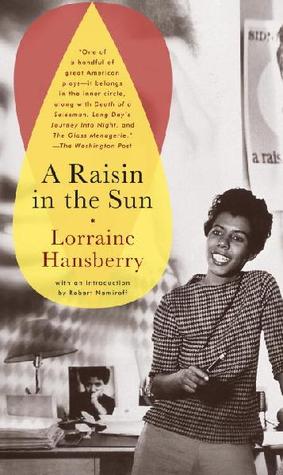
Each person in the family has big dreams of what they want to do with the money when they get it however, Walter is the most vocal about his plans. When the check finally comes, Mama takes the money and buys a house in an all-white neighborhood with half of it and gives the rest to Walter with strict instructions to put half in the bank for Beneatha's medical education and use the other half for whatever he sees fit. Unfortunately, Walter does the opposite and things start to unravel from there.

For once, I can actually agree with the general consensus and say that this particular play is worthy of the title of classic. Everything in Hansberry's play felt extremely relevant and real to me, from the characters who were trying to figure out how to spend their new found fortune to the themes that Hansberry brought up about African-American's place in American society. Even on paper, the characters' emotions and actions are mapped out and shown so well that watching a film or live performance for Hansberry's work was actually unnecessary. I personally enjoyed each aspect of the play and could see how certain issues such as, the idea of the black man's ambitions being unrecognized or the questioning of whether blacks are better off assimilating into the American culture vs. African culture are still relevant. Yet, when I watched the 1961 film adaptation, I wasn't necessarily as impressed by it like I was with the play.

Movie Review

For starters, the movie added and deleted key scenes that were important to the overall message of the play. In one deleted scene, Beneatha cuts her permed hair off and everyone is shocked by her actions. This depiction of going natural was empowering in the play. In the film, this scene is cut so that instead of physically shedding what is implied to be her "assimilated American habits," Beneatha just goes into a monologue about how she will not take on anymore American habits and will instead identify more with her African roots. In my opinion, this scene would have been amazing if it was acted out properly by Diana Sands who played Beneatha.

Likewise, the scene where the Youngers' neighbor comes in to borrow cleaning products before the family moves and warns/reminds Mama that going into an all-white neighborhood to live isdangerous for the times. This particular scene while not as profound as Beneatha's hair cutting scene would have been good to show that not only whites were weary of the trouble that could come from blacks and whites living together. Yet, directors of the film chose to show only the white viewpoint instead in the visit that Mr. Linder who acts as the "welcome committee" to the Youngers' new neighborhood makes to the family's South Side apartment.

Even though the film did delete these two scenes and add scenes where Walter is sitting in a bar or shown chauffeuring his white boss around, I did somewhat enjoy it because of Sidney Poitier's acting in the role of Walter. Out of all the actors in the film, he gave the best performance to me. His emotions were raw and he embodied the idea of being a man who the world had beaten down on to a T. Seeing him play Wlater alongside Ruby Dee who played the role of Ruth was interesting since these two seemed to have good on screen chemistry. While I did enjoy Diana Sands in her role as Beneatha, I was a little annoyed with her character in general in both the play and the book. However, I did chalk this up to being just part of the acceptable emotions that Hansberry's play was meant to draw out of me.

I would definitely recommend the play and the 1961 movie adaption. I eventually hope to get a chance to watch the 2008 film adaption to see how Sean "P. Diddy" Combs acted in his role as Walter. Not to mention Phylicia Rashad is one of my favorite actresses so I would love to see her in the role of Mama as well.

I hope everyone's day went well and that a lot of reading was done in between celebrating Father's Day.

Monday, June 3, 2013

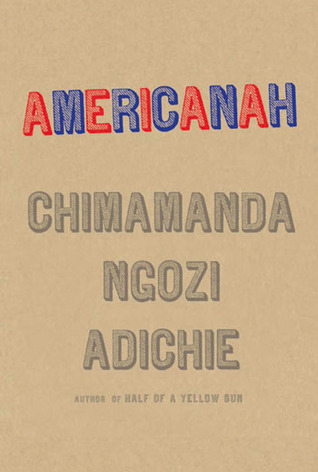
Through The Voice of the "Other": Book Review on Americanah by Chimamanda Ngozi Adichie

 “I think you travel to search and you come back home to find yourself there.”  - Chimamanda Ngozi Adichie
I've been struggling to write a review for Chimamanda Ngozi Adichie's book, Americanah for the past week due to mixed feelings about it. Upon finishing it, I was equal parts content and frustrated with the book. While it met my expectations in a way, I was also let down by certain aspects of the novel. I end up giving this book 4 stars due to a lackluster ending and the general feeling that Adichie only meant her characters to be mouthpieces to voice her feelings on different cultural and political topics.

At its heart, Americanah is a book about various immigrants who are trying to work their way through discovering what it means to be a part of the countries they've immigrated to while also holding on to their original cultures. For the most part, Adichie's story is told through the perspective of Ifemelu, a Nigerian blogger who has lived in America for thirteen years and Obinze, a wealthy Nigerian business man who still lives in Nigeria. From Ifemelu and Obinze's perspective, the reader learns about different race issues that go on in America, the way the Nigerian government works, and hears the stories of different people who have settled abroad or come home to live in Nigeria after living abroad.

As the novel begins, Ifemelu is set to return home to Nigeria after her hiatus in America and decides to reconnect with her childhood sweetheart, Obinze. The two previously lost contact once Ifemelu went to America to finish college. By the time that Ifemelu reaches out to him, Obinze has moved on with his life and is married. Adichie makes it very obvious to the reader that the two characters have built separate lives from the ones that they once lived as carefree children who were oblivious to the ups and downs of Nigerian politics.

The pacing of this story was fairly good. The author was able to say a great deal about the Nigerian culture while also providing adequate details about each of the main characters' lives. There were times in the book where the background history about Nigeria became long winded, but it never got to the point where I felt the need to put the book down. One thing that also hindered the overall pacing of the story was Adichie's habit of adding different blog post from Ifemelu's race blog at different intervals in each chapter. While some of the post were interesting and thought provoking, others just seemed awkward in their placing or unnecessary.

In terms of characters, Adichie creates solid ones to tell her story without making them seem overly preachy. Ifemelu's character is pegged as someone who "tells it like it is" and isn't afraid to call others out on their BS. Behind this character, there is also an inquisitive nature that helps give her the initiative to voice her opinion about race relations in America, as well as, Nigeria and confront different issues that plague immigrants and non-white Americans. This determination to gain an understanding of racial groups who are deemed as "the other" in America (i.e., individuals who are not a part of the dominate race) can also cause readers to label Ifemelu as a callused individual yet, Adichie makes it a point to eventually peel back this character's layers and expose her reasoning behind each negative assessment of American and Nigerian culture.

On the other hand, Obinze is a character that is a dreamer at heart and is initially hell-bent on making his way to America to live out his fictional dream of "making it." Mentally, he believes that life can only begin once he makes it to this glorified Mecca.  Obinze is an individual who also scrutinizes the immigrant's life, but unlike Ifemelu, his character makes it a point to do so from the role of an unbiased onlooker opposed to a blunt critic. It would seem that his longing to become a part of the Western world keeps him from being overly harsh in his judgement of "the other's" role in society in places like England and America.

With the building of Ifemelu and Obinze's character, Adichie creates a storyline that holds the potential to be electric once it hits its climax, but it ends up falling flat for me due to its lack of originality. To me, this is extremely sad because for a good 3/4 of her book, Adichie makes powerful statements about race relations in America and politics in Nigeria. However, when it comes time to wrap up the loose ends of Ifemelu and Obinze's love life, she creates a weak generic ending that feels dry and so unlike what her reader's expect of her characters. In this way, I feel as if Adichie did more telling than actual showing in her book. I was truly interested in the cultural topics she spoke about, but by the end of the book, I sort of got the feeling that she could've condensed the actual love story of Ifemelu and Obinze into a mere 150 to 200 pages and written another book about her feelings on race in America/ Immigration laws in America and England/ Nigerian politics.

I would definitely recommend this book to anyone who is interested in Nigerian culture or who wants to learn what the American or English culture looks like from a non-white immigrant's perspective. However, if you aren't interested in hearing a lot of back history to either of these culture's, I would recommend reading something else.

Sorry for the wait, I've been a tad busy lately. I hope you all enjoyed it.

Cheers!

Monday, May 13, 2013

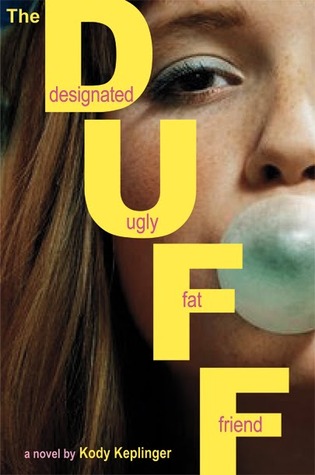
The DUFF by Kody Keplinger Book Review

 I gave this book 5 stars.

Kody Keplinger's novel, The DUFF is the type of book you could read at any age and connect to. The main character, Bianca is a tough as nails girl who's heart has been hardened by the pains of love. Adamant about never falling in love again, she chooses to enter into an "enemies with benefits" relationship with Wesley, the notorious womanizer of her high school who has problems of his own. Together the two teenagers work through their problems in the form of..ahem...advanced cardio for the grown and sexy. <spoiler>However,  even with their preconceived rules of "no feelings" being involved, Bianca and Wesley learn the hard way that love can infiltrate your heart when you least expect it no matter how hard you plan.</spoiler>

Keplinger's characters are well developed and likable. Even though Bianca does come off as cynical at times, the reader gets shown that her feelings of anger and frustration are justified. The way that this character antagonizes over being "the duff" a.k.a the designated ugly fat friend, is something that is especially well portrayed by the author and made into a relatable point for anyone who chooses to read this book due to the fact that most people have felt like the dud of their circle of friends at one point of their life or another.

On the flip side, Wesley's character while clearly placed into the cliched role of being resident bad boy is endearing opposed to annoying. Even when he makes Bianca feel ashamed of herself by calling her the duff, it's apparent that his character is battling his own set of demons and does so only as a knee-jerk reaction to his pain.

Keplinger's choice to use cliched roles in her work is balanced off by the fact that her storyline is solid. Never does the reader feel as if they are being rushed off into a tidy conclusion. Instead, the author paces the story so that her audience can get the full benefit of watching the character's lives come undone and then slowly pieced back together again. Both Bianca and Wesley's character are funny, interesting, and sarcastic enough to keep readers entertained and willing to stick wound to finish Keplinger's story. I would definitely recommend this book to anyone who is in need of a good chick-lit book or who just loves a good novel about bad boys and strong opinionated female leads. Yet, I would caution against letting younger readers begin this book being that it is meant for a <b>mature</b> audience due to explicit sex scenes throughout the novel.

Monday, April 29, 2013

The Power of Greed: Book Review On Aravind Adiga's Last Man In Tower

 The point of this review is more to dispense my troubled feelings about this book than to persuade or dissuade anyone from reading it. I felt something akin to word vomit as I wrote this review so please don't get upset if you find the occasional spoiler within this review. Most of my remarks come from personal feelings about the book and my reactions to my class discussion of this novels.

Cheers!


I gave Last Man In Tower by Aravind Adiga  four stars not because I was head over heels in love with it, but because it lead me to have profound thoughts about the condition of humanity. While this book was required reading for me for Graduate School, there were many times when I wanted to throw it clear across the room out of frustration and anger at the characters' actions.

The story's theme focuses around the duty that one has to his/her community. In this novel, Masterji, a retired Physics teacher living in a co-op in Vakola, Mumbai along with his neighbors are offered the chance to sell their shares in their old apartment building for close to $2,900,000. However, the catch is that the group must do so unanimously. For many in the co-op, the idea of having money and being able to move up in the world is enticing enough to sign without much of a hassle, but for Masterji, the idea of leaving a place where his deceased wife and daughter's last memory rest is unthinkable. Therefore, Masterji refuses to sign and rages a one man  opposition to the builder's proposal. ***SPOILER***Frustrated, his neighbors take matters into their own hands and kills him***SPOILER***

Here, is where my distaste for Adiga's novel sets in. For the whole of the novel, Masterji's neighbor's complained of this man's disregard for his community's wishes yet, everyone ultimately betrayed his wishes for greed. It was argued in my class that Masterji was in the wrong for his action's of refusing to agree to abandon his home and go along with the co-op's wishes however, in my opinion, this line of thinking seems twisted. For the first half of the novel, the individuals of the Vishram Society regarded themselves as "respectable" people and prided themselves on living as upstanding middle class Indians that were commited to doing what was right for their community however, as soon as money was presented to them, they each became greedy and intolerable characters who only thought of themselves exclusively. If the individuals in the society had had better reasons for their actions, I would have felt less trepidation at the characters' final actions, but these characters betrayed Masterji for dollar signs moreso than what they claimed was their chance at "happiness." To me, this greed in Adiga's characters hardened my belief that money really is the cause of all evil.

Not one character in the novel actually ventured to hear Masterji out when he said he wanted nothing from the builder. Since the other characters bathed in the anticipation of becoming rich, they assumed that all Masterji wanted was more money. Even this character's son rejected his father's will and focused more on the money than hearing his father out. This tunnel vision by the other characters sickened me and made reading this novel hard. I wanted to believe by the novel's end that one of them would take pity on Masterji and understand things from his point of view however, this act never surfaced.***SPOILER*** Even though one member of the co-op did get cold feet in the end, this character chose to regain his immorality by the novel's end.***SPOILER***

This being said, Adiga's story is well-crafted and worth a read regardless of it's raw portrayal of humanity. My only gripe besides anger at the characters' pettiness and greed is that in some places, the author overwhelmed the reader with too many details and back history/story. This verboseness had me struggling to keep myself invested in the overall action of the novel (I actually found the last 1/4 of the book to be the best part of the novel). Overall, I would recommend this book at least, as a way to have someone else to discuss the themes and topics in this novel with.

Saturday, April 20, 2013

Going To The Edge Of Crazy: A Book Review On "32 Candles" by Ernessa T. Carter

I gave this book a solid 5 stars!!!

Ernessa T. Carter's book, 32 Candles kept me entertained from start to finish.

Davidia Jones is an outcast at her school and unloved by her mother. Growing up as a dark-skinned African-American girl in her southern Mississippi town, she learns to fold in on herself and become numb to others' taunts about her skin tone. Add to this the fact that Davidia refuses to speak at all, and it's a recipe for disaster. However, once she reaches high school, the unthinkable happens........she falls in love with James Farell, the newly arrived small-town football player and resident rich boy.

While James fails to acknowledge her presence, Davidia takes matters into her own hand and uses her Molly Ringwald-playbook to win James' love. Unfortunately, James's sisters have something else in mind and set off to make Davidia's life hell. Fleeing from her small town after a prank goes too far, Davidia hitchhikes to Los Angeles with a female trucker. Here she changes her name to Davie Jones and becomes a sultry lounge singer. Seventeen years later, James walks back into Davie's life and this time, she's ready.

Davidia/Davie's character is one of those characters that worm their way into the reader's heart and forces them to become invested in the character's story. Davidia's character is well constructed and feels authentic to the reader. Even when she exacts her revenge on the Farell family, the reader has sympathy for her and may even want to help her payback the rich snobs who caused Davidia pain in high school by bullying her.

The author's pacing for this story helps drive the story's action. This is helpful in building the story steadily to climax and keeps the reader interested. The storyline also felt well though out and was easy to relate to whether you were popular in high school or an outcast. While the novel does span over a time period of roughly twenty-eight years, the pacing of the story never has the reader feeling the urge to hit fast forward on Davidia's story.

Carter's novel is definitely one that I would recommend to anyone who wants a taste of revenge or who just loves a good novel about a girl coming of age in the 80's. However, I would caution that this book is meant for a mature audience since there are some heated scenes within the novel that may not be appropriate for a younger audience.

Cheers!


Book Review For Me by Yuaziiqann

I currently finished reading Me by Yuaziiqann. This author offered me a copy of his novel for an honest review. No monetary funds were taken for this review.

I gave this book 4 stars.

This novel starts off with the main character, Aaron getting shot. As he waits for the bullet to find him, he takes the reader back to the beginning of his life and recounts his journey from living in Ghana with his abusive father to his journey to New York with his mother.

The narrative follows Aaron as a child up til his dismal end living as a psuedo-homeless man on the streets of New York. The pacing of the story in the beginning is good and Aaron's story seems promising. Yet, by the middle of the novel, the story takes a dip and the character starts to wax poetic about his existence in the universe as an individual and God's overall existence. While Aaron's fascination with this topic is understandable since his mother dies, the character becomes increasingly unlikeable from this point on.

Nevertheless, the novel is not boring by any account. The author's usage of secondary characters is interesting and helps give the novel more depth. Chris and Zach who are Aaron's best friends provide humor and comic relief in parts of the novel that may have otherwise become tedious.  However, the sexual relationship that forms between these two strikes me as odd. From my vantage point as the reader, it seemed as if the character's actions aren't warranted due to Zach being pegged by the author as totally in love with his girlfriend, Annie and Chris being a complete womanizer. Therefore, the characters' actions come off feeling contrived to me. Another character that was interesting was the character of Princess, a homeless drug addict who Aaron befriends and ends up committing a triple murder with. Princess's role within the novel is thoroughly believable and well thought out. Her character solidifies Aaron's lost of innocence and helps bring sincerity to the main character's lifestyle as a homeless wanderer.

While this book is completely well written and at parts thought-provoking, it wasn't necessarily my personal cup of tea. However, I would recommend that readers who enjoy urban fiction or coming of age stories that are more geared toward adult readers give this book a try.